🏠 Stay at home! 25% discount on all medicines


How Long is Adderall Detectable in Drug Tests? Comprehensive Guide

The increasing use of prescription medications like Adderall for attention deficit hyperactivity disorder (ADHD) and other conditions has naturally led to a rise in drug testing, especially in workplace environments. According to recent statistics, over 70% of employers conduct drug testing for various reasons, including workplace safety and legality. As a stimulant that can enhance focus and energy, Adderall often raises concerns regarding its detectability in drug tests. Understanding the duration for which Adderall remains in one’s system is critical for users, especially those facing impending drug tests.
Adderall is composed of a combination of amphetamine salts, which means its metabolic pathways and excretion processes may vary significantly among users. Both therapeutic and non-therapeutic usage raise important questions regarding detection timelines. For instance, a key statistic revealed that Adderall can be detectable in urine between two to four days after the last dose. For regular or heavy users, this window can extend to a week or more, which has implications for anyone who may undergo routine drug testing.
In this comprehensive guide, we’ll break down how long Adderall is detectable across different testing methods, the factors that influence these durations, and practical steps users can take to prepare for drug tests. Readers can expect a cautionary yet informed exploration of this topic, offering insights for either compliance with regulations or personal understanding.
Understanding Adderall and Its Use
Adderall is a prescription medication commonly used to treat ADHD and narcolepsy. Its active ingredients, amphetamine and dextroamphetamine, enhance the brain’s dopamine levels, transforming the way users handle focus and performance. Despite its legal prescription status, its potential for misuse has garnered considerable attention. Misuse of Adderall is often seen in academic settings where it is utilized as a cognitive enhancer—especially during exam periods. This raises an important issue: how long does Adderall stay in the body after its effects have worn off?
When discussing how long Adderall remains detectable, one must first consider the mechanism of action. Once ingested, Adderall quickly enters the bloodstream and reaches peak concentrations between 3 and 6 hours post-administration. Depending on the form—immediate-release or extended-release—users may experience varying durations of effect. However, the detection in drug tests often continues well beyond its subjective effects, highlighting a significant gap that many people may find themselves unprepared for.
The detection window for any substance varies based on numerous factors including dosage, frequency of use, and individual metabolism. Users often find themselves asking questions such as, “If I took a 20mg dose of Adderall, how long will it be in my system?” and “What can I do to speed up its elimination?” The answers lie in understanding both pharmacokinetics and the different types of drug tests.
How Long is Adderall Detectable in Drug Tests?
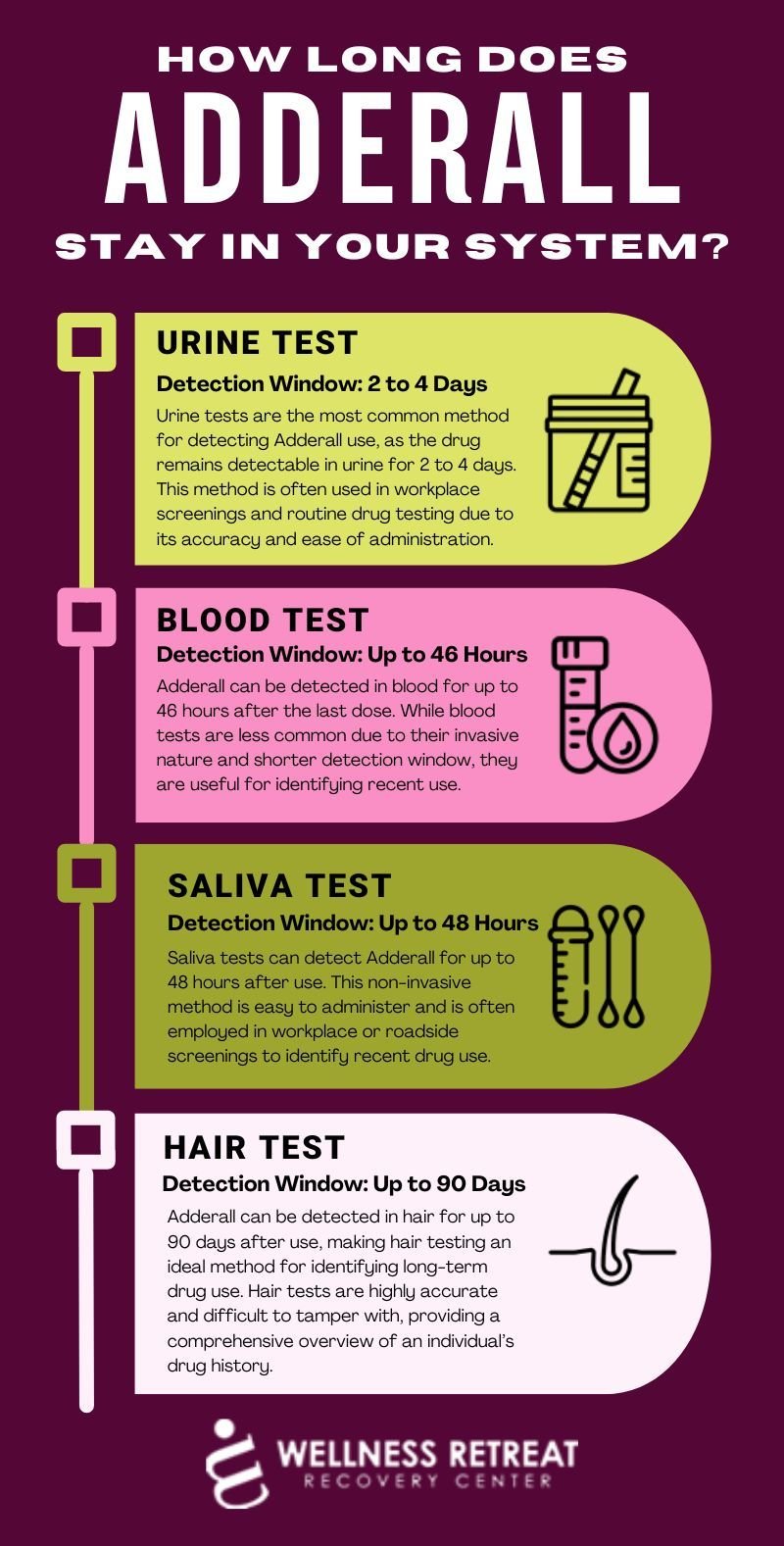
Detection times for Adderall vary depending on several factors, including the type of test administered. The most common drug tests include urine tests, blood tests, saliva tests, and hair follicle tests. Let’s explore each of these methods and the corresponding detection timelines for Adderall:
Urine Testing and Adderall
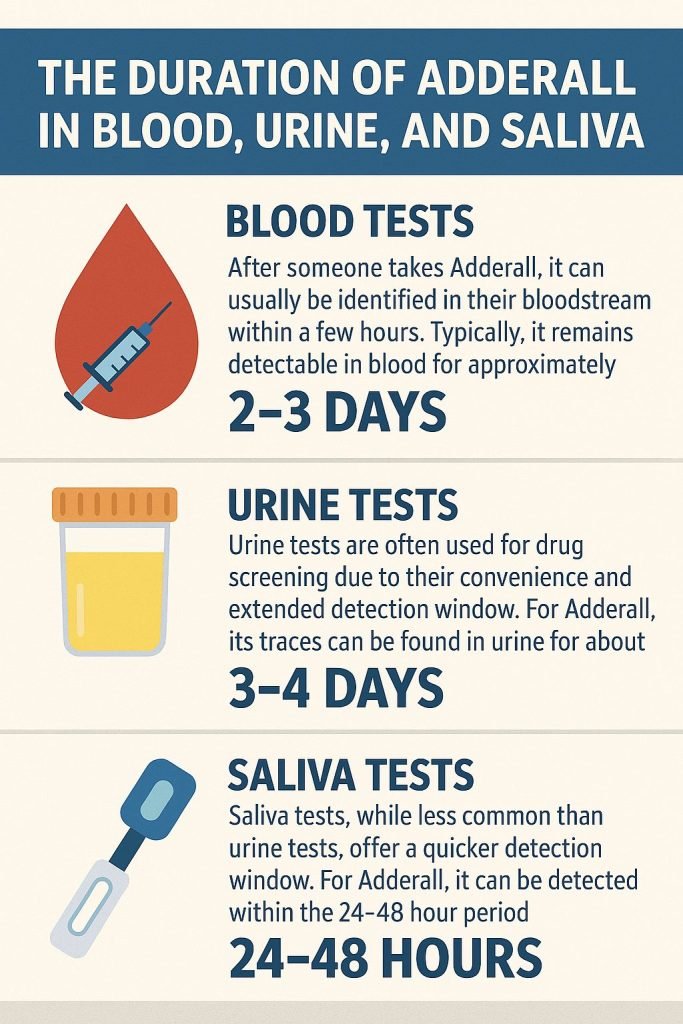
Urine tests are the most commonly used form of drug testing due to their ease and cost-effectiveness. According to scientific studies, Adderall can typically be found in urine between 2 to 4 days after the last dose for occasional users. However, for those who use Adderall frequently or at higher doses, the detection period could extend to a maximum of 7 days.
Specifically, the metabolism of amphetamines can produce metabolites detectable in urine. Research suggests that the primary metabolite, amphetamine, can remain in the urine significantly longer in patients who take larger doses against a background of habitual use. This behavioral context is pertinent for anyone considering their exposure and detection risk after a drug test.
It is essential to note that factors such as hydration levels, body mass, and individual metabolic rates can influence these detection windows. A common user may find fluctuations, and it’s often prudent to accommodate for these variations when preparing for a test.
Blood Testing and Adderall
Detection of Adderall in blood tests is considerably shorter when compared to urine testing. Typically, Adderall is detectable in the blood for approximately 24 to 46 hours post-ingestion, which can significantly narrow the window for those subjected to blood tests. Blood testing directly assesses the active substances in the bloodstream, providing a real-time picture of substance use.
Blood tests are less common due to their invasiveness and higher costs, but they do offer the quickest results. For individuals who are on a structured program for ADHD, regular blood testing may provide more accurate and humane monitoring, assuming the individual is within their prescribed limits.
Many users have asked relevant questions about blood tests based on their experiences and anecdotes shared on forums. Particularly, there is a prevailing sentiment that seeking to “cleanse” the body and expedite elimination through hydration or other detox techniques has varying levels of success in actual practice.
Saliva Testing and Adderall
Saliva tests represent another viable but less commonly employed method for detection. Salivary testing for Adderall generally indicates detectability for approximately 20 to 50 hours following the last use. This method is often utilized in workplace settings due to its relative ease of administration and ability to ascertain recent drug use. Like blood tests, saliva tests may reflect a more immediate state of consumption.
Saliva drug tests operate by detecting the presence of drugs within an individual’s saliva, providing a non-invasive alternative to conventional methods. The time frame for detection can vary based on factors like dosage and personal metabolic rate. Frequent users might notice prolonged detection periods not only due to accumulation of the drug in their systems but also due to their ongoing consumption patterns.
Hair Follicle Testing and Adderall
Hair follicle testing offers the longest detection window among all testing methods, where Adderall can potentially be traced back in a user’s system for up to 90 days. This method analyzes substances trapped in the hair shaft, representing a more historical timeline of drug use rather than recent consumption.
The draw of hair testing is its ability to provide a comprehensive overview of long-term substance use, making it particularly valuable in situations where employers require a more thorough examination of an applicant’s background. However, the higher cost and longer turnaround time make this less favorable for routine workplace testing.
It’s crucial to note that hair tests are less sensitive to occasional users. If a person rarely uses Adderall, it’s possible they might pass a hair test, while someone with a history of regular consumption would likely face detection. This presents a unique dynamic for potential employers assessing drug histories.
Factors Influencing Detection Timelines
Understanding how long Adderall remains detectable is a multifaceted issue that transcends mere drug detection thresholds; it encompasses factors related to user behavior, metabolism, and physiological characteristics. Recognizing these variables is foundational to analyzing individual user risk in relation to drug tests.
Frequency and Dosage of Use
Perhaps the most substantial factor influencing how long Adderall stays in a user’s system is frequency and dosage. Occasional users may find a detection window ranging from 2 to 4 days, while regular users who take higher doses could see that window extend significantly up to a week. This variability underscores the importance of understanding personal patterns of usage.
When analyzing the effects of higher doses, individuals may accumulate amphetamines and their metabolites faster than the body can eliminate them. This accumulation may lead to prolonged detection times, which can be a concern for anyone subject to unpredictable testing environments such as employment or legal issues.
Additionally, users may find themselves reflecting on how specific doses affect their cognitive performance and whether higher therapeutic doses can inadvertently raise the risks associated with drug testing. It is vital to consult healthcare providers for clarification on appropriate dosing schedules if individuals find themselves in this situation.
Individual Metabolism and Body Composition
Another critical aspect is individual metabolic rates and body composition. Factors such as age, weight, gender, and overall health can significantly affect how quickly substances are metabolized and excreted from the body. For instance, a young, physically active individual may metabolize Adderall faster than someone older with a different metabolic profile.
Hydration levels also substantially impact detection timelines. Proper hydration may help flush substances from the body more rapidly, while dehydration can slow metabolic processes and prolong detection times. Users should be aware of their own bodies and consider how lifestyle choices may influence drug test outcomes.
Overall, personalized metabolism factors complicate the prediction models around detection. It becomes vital for users to not only consider the active ingredients but also how their unique biological makeup influences their specific experiences with drug testing.
Other Factors
Several other external factors can also influence detection times for Adderall. For instance, urine pH levels can affect how drugs are excreted. A more acidic urine can facilitate faster excretion, impacting the detectability of substances. Similarly, certain medications, foods, or supplements may interact with metabolic pathways either enhancing or delaying substance elimination.
Stress levels and lifestyle habits may play roles as well; heavy stress can alter metabolism and have lingering effects on the body’s ability to process substances efficiently. This interplay of various factors renders individualized assessment more necessary than ever for those who are subject to regular drug testing.
What If You Need to Clear Adderall from Your System?
For individuals who may be concerned about upcoming drug tests, there are various approaches suggested to accelerate the clearance of Adderall from the body. However, it is essential to understand that these methods may not be universally effective, and outcomes can vary significantly.
Hydration and Diet
One commonly advised method is to increase fluid intake significantly before a test. Staying well-hydrated is believed to assist in the body’s natural detoxification processes. Regular water intake promotes urine production, which may help flush out substances faster. However, over-hydrating can lead to complications such as water intoxication and may raise suspicion during drug testing.
What one eats may also have effects on drug metabolism. Foods rich in antioxidants and fiber can help support overall liver function, optimizing the body’s ability to process and eliminate drugs. Some users discuss incorporating lemon juice or cranberry juice in their diets, claiming both may provide temporary benefits in detoxifying the system; however, there is no substantial scientific evidence supporting these claims.
Detox Drinks and Supplements
Many commercial products claim to expedite the detox process, ranging from detox drinks to supplements. These products often include various herbs, minerals, and vitamins that are marketed to “cleanse” the body. While some users report success, the scientific backing behind these detoxifying products remains largely anecdotal.
Approaching these products with caution is critical, as some may contain substances that could interfere with drug tests or have unwanted side effects. Finding a reputable source that offers products backed by research is essential. Always consult with healthcare providers about any substance before trying.
Asking Questions and Seeking Support
Given the complexities of pharmacokinetics, users should prepare themselves by asking relevant questions such as, “How soon before I need to test should I stop taking Adderall?” or “What should I do if I’m worried about testing positive?” Seeking professional advice can help users make informed decisions about managing their respective situations.
Support groups or online forums can offer shared experiences around drug testing related to ADHD medications, yet it’s vital to remember that personal stories do not constitute medical advice. Consulting with medical professionals is always advisable in navigating these concerns.
Common Misconceptions About Adderall and Drug Testing
The landscape surrounding Adderall and drug testing is often rife with misconceptions that can lead to anxiety or misinformed decisions among users. Addressing these misconceptions plays an essential role in properly educating users about what to expect.
Myth: Adderall is Only Detected in Urine Tests
One common myth is that Adderall is only detectable in urine tests. In reality, it can be detected via several testing methods, including blood, saliva, and hair, with each offering distinct time frames and insights into use patterns. This highlights the importance for users to be aware of the potential testing methods they may face.
Myth: Drinking Large Amounts of Water Will Guarantee Passing a Test
Another prevalent belief is that excessive water consumption will automatically increase the chances of passing a drug test, which is misleading. While hydration can help dilute urine, flushing substances entirely from the body requires time and consistent metabolic processing. Furthermore, attempts to dilute urine samples can raise red flags during testing.
Myth: Only Heavy Users Face Detection
It’s also misleading to assume that only heavy users face the risk of detection. Even once-off use, like taking a 10mg dose, can lead to positive results in the right testing circumstances. Therefore, even sporadic users should approach drug testing with caution and consideration throughout their personal usage patterns.
FAQ: Common Questions About Adderall and Drug Testing
How long does Adderall stay in your system if I take a 20mg dose?
A 20mg dose of Adderall can typically remain in your system for 2-4 days for occasional users. However, for habitual users or higher doses, it might take up to a week or longer for the substance to be cleared completely. Individual metabolic rates can significantly impact these timelines.
What does Adderall show up as on a drug test?
On a standard drug test, Adderall is generally classified under amphetamines. Most drug panels will include a section testing for amphetamines, which will capture substances like Adderall, as well as illegal drugs like methamphetamine. The specificity of testing kits may vary, but users should be aware that amphetamines can lead to a positive result.
How can I flush Adderall out of my system for a drug test?
To help flush Adderall out of your system more effectively, increasing fluid intake is key. Staying well-hydrated helps support the metabolic processes that facilitate elimination. Eating a healthy diet rich in antioxidants may also enhance liver function, assisting in detoxification. However, one should consult with a healthcare provider before employing any detox programs.
Will 10mg of Adderall show up on a drug test?
Yes, a 10mg dose of Adderall can show up on a drug test. Even small doses can be detected, particularly in urine tests. As with higher doses, detection times can vary, but individuals should be aware of how even occasional usage could lead to positive results.
What do I do if I need to take a drug test but have been using Adderall?
If you anticipate needing to take a drug test after using Adderall, the best course of action is to stop taking the medication as early as possible and remain well-hydrated. Consult with a healthcare provider about your situation, and consider seeking support to ensure proper management of ADHD-related symptoms.
How long does Adderall stay in your urine test?
Adderall may remain detectable in your urine for approximately 2 to 4 days for casual users and potentially up to 7 days for frequent users. Testing methodologies and individual metabolic rates will have a considerable influence on these durations.
Conclusion
Navigating the complexities surrounding Adderall and drug testing is essential for those who find themselves regularly subjected to testing protocols. From understanding detection times across various testing methodologies to recognizing individual differences, it’s crucial to be self-aware. While the substance can offer significant therapeutic benefits for ADHD, the realities of potential misuse and regulatory constraints are undeniable.
Understanding that Adderall can be detectable from two to four days for occasional users and up to 90 days based on hair testing provides valuable information for anyone depending on this medication. As we’ve discussed, various factors—ranging from use patterns to individual metabolic characteristics—play a significant role in how long Adderall remains in the body.
In preparing for any potential drug tests, always consult healthcare professionals about concerns related to substance use. Staying informed and taking proactive measures is the best approach to navigate the landscape effectively, providing clarity and reassurance in personal management.
