🏠 Stay at home! 25% discount on all medicines


How Long Does Ambien Stay in Your System? A Comprehensive Guide

Ambien, generically known as Zolpidem, has become a widely prescribed medication for insomnia, allowing many individuals a much-needed respite from sleepless nights. The medication operates quickly, inducing sleep in a short timeframe. However, a common question arises: how long does Ambien stay in your system? The answer, while straightforward on the surface, is influenced by several factors including dosage, metabolism, and individual health conditions.
Understanding the pharmacokinetics of Ambien is equally vital for patients and healthcare providers. Ambien is known for its relatively short half-life, making it effective for inducing sleep without lingering throughout the day. Yet, this brevity also introduces complexities when considering how this drug interacts with the body and how long it can be detected in various tests. With the nuances of drug testing being a concern for many, a comprehensive understanding of Ambien’s duration in the body and the implications of its detection is essential.
This article delves into how long Ambien remains in the system post-ingestion, the different testing methods used to detect the drug, variations in detection times between different test types, and the factors that can influence these timelines. Furthermore, we will address common concerns and questions surrounding Ambien, all aimed at providing a detailed overview for both users and healthcare professionals.
How Long Does Ambien Stay in Your System?
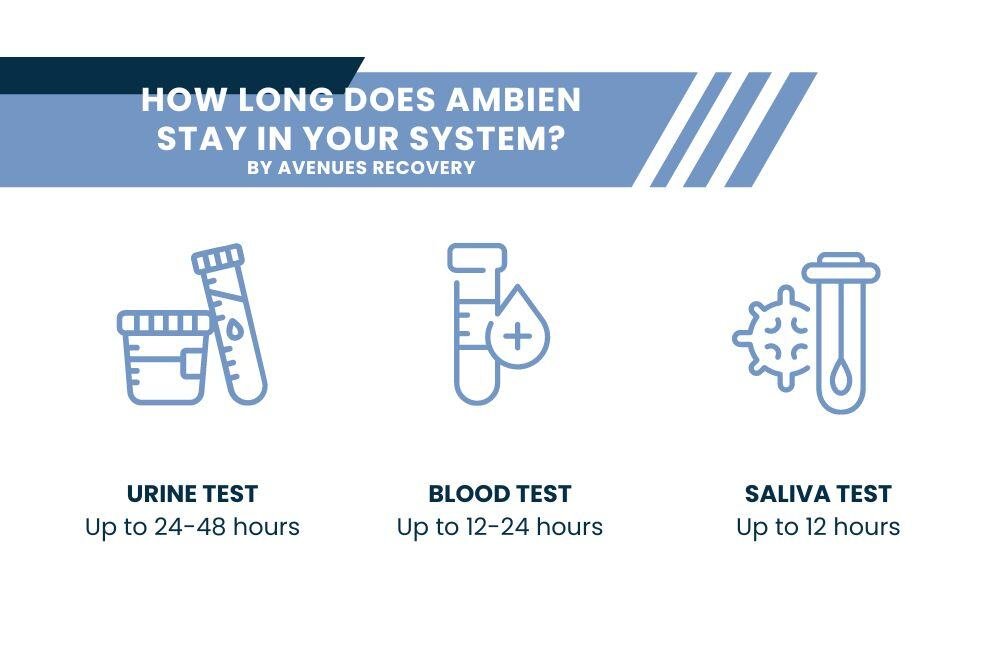
On average, Ambien is detectable in urine for 24-48 hours after ingestion, in blood for 6-20 hours, and in saliva for 8-24 hours. However, these detection times are subject to variation based on several factors. Typically, Ambien’s half-life, which is approximately 2.5 hours in healthy adults, means it can clear from the bloodstream relatively quickly, usually within a 12-18 hour timeframe.
Individuals who take Ambien can expect it to start wearing off after several hours, but the drug can still be identified in laboratory screenings up to two days later, particularly in urine testing. It’s essential for users to understand that while the effects may diminish within hours, traces of the drug can remain detectable for a longer duration.
The variability in detection also heavily relies on a person’s metabolic rate, age, overall health, and frequency of use. Factors like hydration levels, diet, and liver function are also critical in determining how quickly the drug is processed and eliminated from the body. Therefore, personalization of information is key in understanding how long Ambien stays in the body for each individual.
Factors Influencing How Long Ambien Stays in Your System
Several factors can significantly influence the duration Ambien stays in your system. First and foremost is an individual’s metabolism. A faster metabolism can expedite the clearance of the drug, whereas a slower metabolism can lead to prolonged presence in the system. Age plays a crucial role, as older adults often experience slower metabolic rates and may find that Ambien remains in their systems longer compared to younger individuals.
Another major factor is body mass and overall health. Individuals with liver impairments or those who are taking other medications can experience altered drug clearance due to interactions that influence liver function, either enhancing or inhibiting Ambien metabolism. For example, medications categorized as strong CYP3A4 inhibitors can increase Zolpidem levels significantly, prolonging the time it stays in the body.
Lastly, the psychological and biological state at the time of ingestion—such as stress levels, hydration, and nutrient absorption—can impact how the body metabolizes Ambien. Thus, it’s imperative for users to consider these individual factors when thinking about how long Ambien might affect them.
Ambien Testing: Understanding Drug Tests
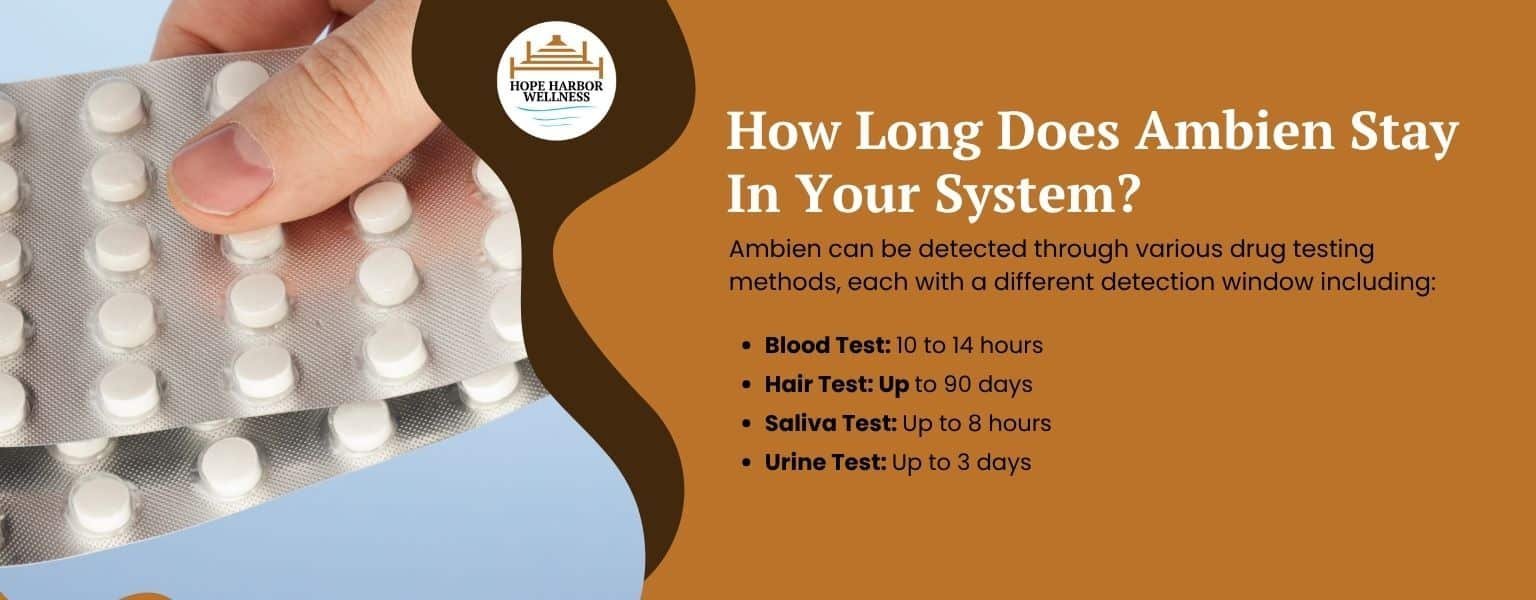
To effectively answer how long Ambien stays in your system, it is equally important to understand the different tests that detect it. The three most common drug testing methods are urine testing, blood testing, and saliva testing. Each method has varying detection windows.
Urine tests are the most frequently used and can generally detect Ambien for 24-48 hours post-ingestion. Blood tests, however, have a shorter detection window, revealing the presence of the drug for about 6-20 hours. Saliva tests fall somewhere in between, usually identifying Ambien for approximately 8-24 hours. Hair tests present a significantly longer detection period; they can trace the drug for as long as five weeks.
While the aforementioned testing methods are standard, it’s important to recognize that Ambien does not show up as a benzodiazepine on drug screens. Instead, it is categorized distinctly, often requiring specific tests to identify its presence. Users must be aware of this to avoid potential misinterpretations of their drug test results.
How Long Does 5mg Ambien Stay in Your System?

Ambien comes in various dosage forms, with 5 mg and 10 mg being the most common for adults. There is a common misconception that higher doses stay longer in the system. However, in practical terms, the 5 mg dose of Ambien typically follows the same clearance timeline as the 10 mg dose due to the way the drug operates within the body.
Both dosages have an average half-life of approximately 2.5 hours, leading to a similar duration of effects and detectability. Therefore, a low dose of 5 mg may not necessarily remain in the system significantly longer than a dose of 10 mg. In healthy individuals, both dosages tend to clear from the bloodstream within the 12-18 hour window, although factors such as frequency of use and individual metabolic variables will still play a role.
Moreover, those who consume Ambien regularly may notice a cumulative impact, leading to prolonged detectability. Long-term users may experience longer times before the drug is fully eliminated from their systems compared to someone using it sporadically. Therefore, while the basic rules of clearance apply, unique individual factors still dictate the final detection timeline.
How Long Does Ambien Take to Kick In?
Understanding how quickly Ambien begins to work is essential for its effective use. Typically, Ambien can take effect within 15-30 minutes, leading individuals to often fall asleep quite rapidly. However, the onset of action may vary based on when the medication is ingested, individual metabolism, and whether it is taken on an empty stomach.
Taking Ambien with food can delay its onset slightly, as food in the stomach can impact how quickly the medication is absorbed. Therefore, for users looking for a rapid effect, consuming Ambien on an empty stomach can facilitate faster processing. However, it’s crucial to follow recommended dosages and timings as directed by healthcare providers.
Some users might take Ambien and not experience sedative effects if there is interference in its absorption. Factors such as gastrointestinal issues or interactions with other medications may alter the expected timeline. It’s essential to consult with a healthcare provider regarding timing and dosage to ensure effective and safe usage.
Withdrawal from Ambien: How Long Does It Last?
If a regular user decides to stop taking Ambien, withdrawal symptoms may occur, which creates a new dimension to the discussion of how long Ambien stays in the system. Symptoms of Ambien withdrawal can appear as soon as 12 hours after the last dose and might last for several days to weeks, depending on various factors including the duration of use and dosage.
Withdrawal symptoms can include anxiety, insomnia, and rebound effects, where the insomnia becomes markedly worse than before treatment. In some cases, physical symptoms such as headaches, palpitations, or gastrointestinal distress may also arise. While graduation off the medication may be uncomfortable, tapering the dosage under medical guidance can mitigate severe withdrawal symptoms.
It’s highly recommended for users to consult healthcare professionals to establish a plan for tapering if they decide to discontinue the use of Ambien, reducing the risk of major side effects and challenges associated with withdrawal.
Does Ambien Show Up on a DOT Drug Test?
In regulated industries, particularly in safety-sensitive positions, drug testing is a common practice. Users may be concerned whether Ambien shows up on a Department of Transportation (DOT) drug test. The standard DOT drug test does not routinely include tests for sleeping aids such as Ambien, but safety-sensitive personnel should be aware that some specialty tests for Zolpidem do exist.
In essence, under typical DOT testing regulations, Ambien is not prioritized for screening like more common substances, including cannabis, cocaine, or opioids. However, if there is a need for a comprehensive panel or if there are specific reasons to suspect its use, Ambien could be tested for directly. Users should remain cognizant of the potential for testing outside normal protocols and consult their employers regarding specific testing policies.
Does Ambien Show Up as a Benzodiazepine?
A common concern among users is whether Ambien is classified as a benzodiazepine. Ambien is not a benzodiazepine but belongs to a class of medications known as non-benzodiazepine hypnotics. This classification means that it has a different mechanism of action when compared to traditional benzodiazepines like Valium or Xanax.
Due to its unique composition, Ambien does not show up as a benzodiazepine on most standard drug tests, making it challenging for some users to understand why its detection may vary in testing scenarios. However, specific tests designed to detect Zolpidem do exist, which will confirm its use, independent of the benzodiazepine category.
While Ambien can provide relief for sleep-related challenges, users must remain aware of its implications on drug testing and classification for comprehensive safety while using it responsibly.
FAQs About Ambien
1. How long does it take for Ambien to wear off?
The sedative effects of Ambien typically last for about 6-8 hours after taking the medication. After several hours, most users report feeling less sedated, but the exact duration of effects can vary based on dosage and individual metabolism.
2. Can I take Ambien every night?
Ambien is generally not recommended for long-term use. Doctors typically prescribe it for short-term insomnia to prevent dependency and worsen insomnia symptoms. Those relying on Ambien nightly should discuss their sleep challenges with their healthcare provider to identify alternative solutions.
3. What should I do if I miss a dose of Ambien?
If you miss a scheduled dose of Ambien, it is advised not to double the dose to compensate for the missed one, especially if it’s closer to your next scheduled dose. Instead, wait until the next scheduled time to take your medication. Consult your healthcare provider for specific guidance tailored to your situation.
4. How does alcohol affect Ambien?
Combining alcohol with Ambien is highly discouraged due to the potential for heightened sedative effects, which can lead to dangerous side effects such as extreme drowsiness, respiratory depression, or loss of consciousness. Always discuss alcohol consumption with your healthcare provider when taking Ambien.
5. Can I take Ambien with other medications?
It is crucial to consult a healthcare provider before combining Ambien with other medications. Certain drugs may interact with Ambien, enhancing its sedative effects or leading to severe adverse reactions. Always ensure medications are compatible prior to administering them concurrently.
Conclusion
Understanding how long Ambien stays in your system requires diving into the science of drug metabolism and individual health factors. While Ambien can provide immediate relief for insomnia, its impact varies widely among users based on multiple factors including usage patterns, overall health, and genetic predispositions. The general detection timelines suggest a brief presence in the bloodstream, but it is vital to consider individual variabilities that can affect these metrics.
By familiarizing oneself with the specifics of Ambien’s effects duration, testing implications, and possible withdrawal symptoms, users can navigate their treatment sessions responsibly. For those who may consider discontinuing its use, creating a plan with a healthcare provider can make a significant difference in withdrawal experiences and ensure safe transitions.
Ultimately, while Ambien is a potent tool for addressing insomnia, mindfulness around its usage and recognition of its detection in various tests are critical. For individuals seeking help for sleep issues or assessing their usage, communication with healthcare professionals stands paramount to ensure safe and effective management of their health.
