🏠 Stay at home! 25% discount on all medicines


Focalin vs. Adderall: A Comprehensive Guide to ADHD Medications

Attention-Deficit/Hyperactivity Disorder (ADHD) is one of the most common neurodevelopmental disorders affecting children and teens, often continuing into adulthood. The prevalence of ADHD has spurred significant research into effective treatments, with various medications becoming widely available. Among these, Focalin and Adderall are two of the most prescribed stimulant medications. While both aim to alleviate ADHD symptoms, they comprise distinct active ingredients, mechanisms, and user experiences.
According to the CDC, approximately 6.1 million children in the U.S. have been diagnosed with ADHD, leading to increased demand for effective treatment options. This necessity has raised questions about the differences between medications like Focalin and Adderall, particularly as patients seek the best possible outcomes with minimal side effects.
In this detailed comparison, we’ll delve into the ingredients, mechanisms of action, efficacy, side effects, prescription practices, and user experiences surrounding Focalin and Adderall. By the end, you’ll have a comprehensive understanding of their differences and which medication may better suit your needs or that of a loved one.
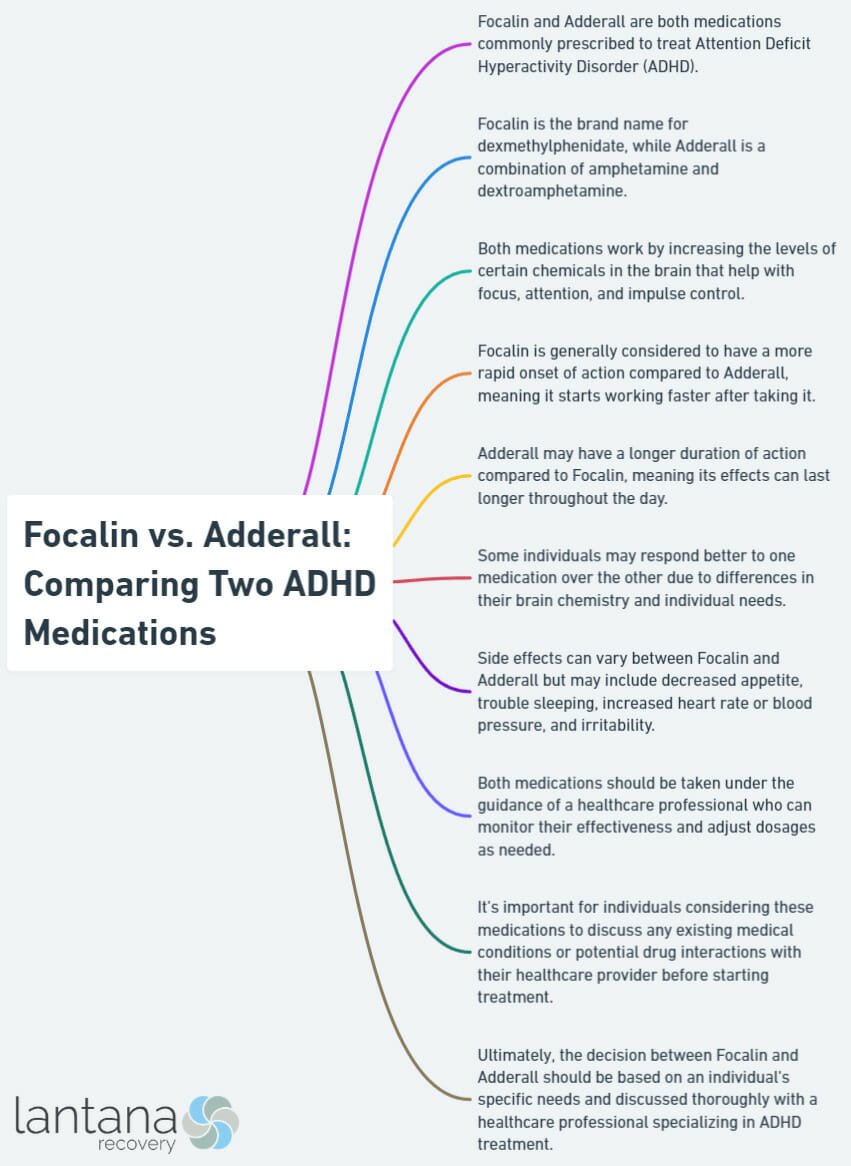
Understanding the Active Ingredients: What Sets Focalin and Adderall Apart?
At the core of Focalin and Adderall’s functionality lies their active ingredients. Focalin contains dexmethylphenidate, which is a refined formulation of the older medication methylphenidate, while Adderall comprises a combination of amphetamine salts.
The clear distinction between these two medications primarily rests in their chemical composition. Dexmethylphenidate is designed to be more potent than its predecessor, necessitating lower doses to achieve the desired therapeutic effects. In contrast, Adderall represents a blend of four different amphetamine salts, which together offer a broader therapeutic scope but may also yield a wider array of side effects.
Understanding the differences in active ingredients helps us explore how these medications interact with the central nervous system. Both medications are classified as central nervous system (CNS) stimulants; however, their mechanisms of action diverge slightly. Focalin enhances the levels of dopamine and norepinephrine in the brain by blocking their reuptake, which increases neurotransmitter availability. On the other hand, Adderall works similarly but may stimulate the release of additional neurotransmitters, enhancing overall brain function even more.
What are the Mechanisms of Action?
Focalin facilitates increased concentrations of dopamine and norepinephrine by inhibiting the transporters responsible for their reuptake. As these neurotransmitters become more abundant, cognitive functions such as attention, focus, and impulse control improve significantly. This action is particularly essential for ADHD patients, as they often struggle with deficits in these areas.
Adderall’s multifaceted mechanism allows it not only to block neurotransmitter reuptake but also to encourage the direct release of dopamine and norepinephrine from presynaptic neurons. This dual approach can lead to a stronger and longer-lasting effect, which may be especially beneficial for individuals requiring more robust stimulation to manage their symptoms.
Such differences in mechanisms can lead to varying experiences among individuals using these medications. While one may find Focalin to be more effective for a particular cognitive domain, another individual may benefit more from the holistic approach offered by Adderall.
Dosage and Administration Differences
Another vital consideration when comparing Focalin and Adderall is their dosage and administration practices. Both medications are available in immediate-release and extended-release formulations, enabling flexibility in prescribing according to individual patient needs.
Focalin is often dispensed in two formulations: Focalin IR (immediate-release) and Focalin XR (extended-release). The immediate-release version starts working within 30 minutes and lasts about four to six hours, while the extended-release formulation can offer symptom relief for up to 12 hours. Typical starting doses for children could begin as low as 2.5 mg, with potential titration based upon the patient’s response.
Adderall, conversely, is available in more formulations: Adderall IR and Adderall XR, with the same timeframes for onset and duration of effect. However, the typical starting dose for children might be higher, around 5 mg, reflecting the stronger overall potency associated with amphetamines when compared to the methylphenidate family.
How Do the Potencies Compare?
Determining the appropriate dosage often requires understanding the relative potencies of these medications. Clinical guidelines suggest that 1 mg of dexmethylphenidate (Focalin) is approximately equivalent to 2.5 mg of methylphenidate or 5 mg of amphetamine (Adderall). Consequently, careful consideration is necessary when transitioning from one medication to another, as the dosage equivalences must be weighed to avoid under- or overdosing.
Patients switching medications may begin with lower doses and progressively adjust upwards as needed, guided by clinicians. This step is critical in avoiding adverse reactions or encountering insufficient therapeutic effects during the transition.
Effectiveness: Which Medication Works Better?
Both Focalin and Adderall have demonstrated efficacy in reducing ADHD symptoms, but effectiveness can vary significantly from one individual to another. A body of evidence suggests that while both medications are effective, their action may be more beneficial for particular patient profiles.
According to research published in journals focusing on ADHD and behavioral disorders, studies indicate that amphetamines (such as Adderall) may provide longer-lasting effects compared to methylphenidate-based medications (like Focalin). However, reactions to medications are highly individualized—some users report better cognitive control and fewer side effects with Focalin than Adderall.
Another aspect worth considering is the onset and peak effect time. Focalin often peaks in serum concentration approximately 1-4 hours after administration, while Adderall peaks around 2-3 hours post-ingestion. For individuals seeking more immediate relief of symptoms, this information can help in decision-making.
Adverse Effects: Analyzing Risks
Both Focalin and Adderall come with a spectrum of potential side effects related to their stimulant nature. Understanding these risks can play an essential role in the medication choice process.
Common side effects of Focalin may include:
- Reduced appetite
- Insomnia
- Dry mouth
- Increased heart rate
- Headache
On the other hand, Adderall users may experience similar side effects, with some additional risks linked to stimulant abuse, such as increased blood pressure and potential dependency due to its amphetamine profile.
While both medications can lead to anxiety, irritability, and cardiovascular strain, research indicates that patients transitioning to Focalin often report fewer and less severe side effects, especially around appetite suppression and anxiety levels.
Comparative User Experiences: What do Users Say?
User experiences across various online discussion boards, including popular platforms such as Reddit, suggest mixed opinions between Focalin and Adderall. Those who struggle with the adverse effects of amphetamines often report favoring Focalin due to its ostensibly milder side effect profile.
For many patients switching from Adderall to Focalin, the feedback frequently highlights improvements in productivity without the intense spikes and crashes that sometimes characterize Adderall usage. Conversations on platforms like Reddit divulge personal accounts of individuals who found themselves more emotionally stable and less irritable after transitioning to Focalin.
However, others argue that Adderall’s accessibility and slight advantages with longer-lasting effects make it the preferred choice for chronic management. Users often cite personal differences in dopamine response and efficacy in symptom resolution as major factors that contribute to their preferences.
What Are the Considerations for Switching Between Medications?
Switching from Focalin to Adderall or vice versa necessitates careful consideration and a detailed discussion with healthcare providers. Factors to deliberate include personal history with each stimulant, response to therapeutic effects, preferred timeframes, and potential side effects.
Patients should be cognizant of their own body’s reactions. For example, someone who experiences anxiety with Adderall may find better results while on Focalin. Alternatively, an individual requiring a more substantial stimulant impact could see improved focus with Adderall’s amphetamine profile.
Ultimately, while personal accounts and preferences play essential roles, healthcare professionals can offer targeted advice based on clinical evidence and an individual’s history, guiding the prescribing decisions appropriately.
Focalin vs. Adderall: Conclusions on Effectiveness
When considering the effectiveness of these two stimulant medications, the decisive factor often comes down to personal experience, specific symptomatology, and tolerance to side effects. Patients must engage in open communication with their healthcare providers to identify which medication can yield the best results for them.
Numerous studies have shown that Focalin can be equally effective as Adderall for many users, especially those focused on managing side effects more than expanding the range of therapeutic effects. But the choice remains highly individual; a pharmacist’s or physician’s input can help dissect clinical goals while accommodating for user preference.
Frequently Asked Questions (FAQs)
1. What’s the primary difference between Focalin and Adderall?
The primary difference between Focalin and Adderall lies in their active ingredients: Focalin uses dexmethylphenidate, while Adderall comprises a mix of amphetamine salts. This results in variations in effectiveness and side effects, making it crucial to discuss which medication is better suited for individual patient needs.
2. Are there significant side effects of switching from Adderall to Focalin?
Switching from Adderall to Focalin can potentially elicit different side effects depending on the individual’s body chemistry. While patients switching may experience milder side effects on Focalin, they might also need to monitor the effectiveness of the medication closely. Gradual dosage adjustments under a physician’s guidance are often recommended to mitigate any adverse reactions.
3. Is Focalin effective for adults with ADHD?
Yes, Focalin is effective for adults with ADHD. Studies show that it can improve attention and reduce impulsivity in adults just as it does in children. Patients should be aware of their personal response, as some may find either Focalin or Adderall better suited to their needs.
4. How do the dosages of Focalin and Adderall compare?
Dosages between Focalin and Adderall need individual assessments, considering that 1 mg of Focalin is roughly equivalent to 2.5 mg of Adderall. Therefore, transitioning between the two drugs should be controlled by professional medical advice to avoid adverse effects.
5. Can Focalin and Adderall be taken together?
Focalin and Adderall should not be taken together unless prescribed by a healthcare professional. Both medications act as stimulants and pose similar side effects; combining them could amplify risk factors like increased heart rate, hypertension, and anxiety.
6. How long does it take for Focalin to work?
Focalin typically begins to work within 30 minutes of ingestion, with peak effects occurring within 1-4 hours. Individual responses to medication may vary, so monitoring during this onset period is essential to recognize how well it alleviates ADHD symptoms.
7. What should I consider before starting either medication?
Before starting either medication, it’s crucial to consult with a healthcare provider about your medical history, other medications currently being taken, and any existing mental health issues. These discussions can ensure the chosen medication aligns with health goals and minimizes the possibility of adverse reactions.
Summary and Key Insights
Understanding the differences between Focalin and Adderall is essential for anyone seeking effective ADHD treatment. Both medications possess unique profiles shaped by their chemical compositions and mechanisms of action, leading to differing experiences. The best choice ultimately depends upon individual responses, personal experiences with side effects, and specific needs.
In recognizing that many patients can find success with either option, ongoing dialogue with healthcare providers is paramount in optimizing medication management. Stimulant transitions should always be conducted under medical supervision, facilitating a safer and informed approach to ADHD treatment.
In summary, whether you favor Focalin or Adderall for ADHD management, prioritize a treatment plan rooted in evidence and guided by professional advice to ensure the highest possible quality of life.
