🏠 Stay at home! 25% discount on all medicines


Adderall vs Ritalin: A Comprehensive Guide to ADHD Medications

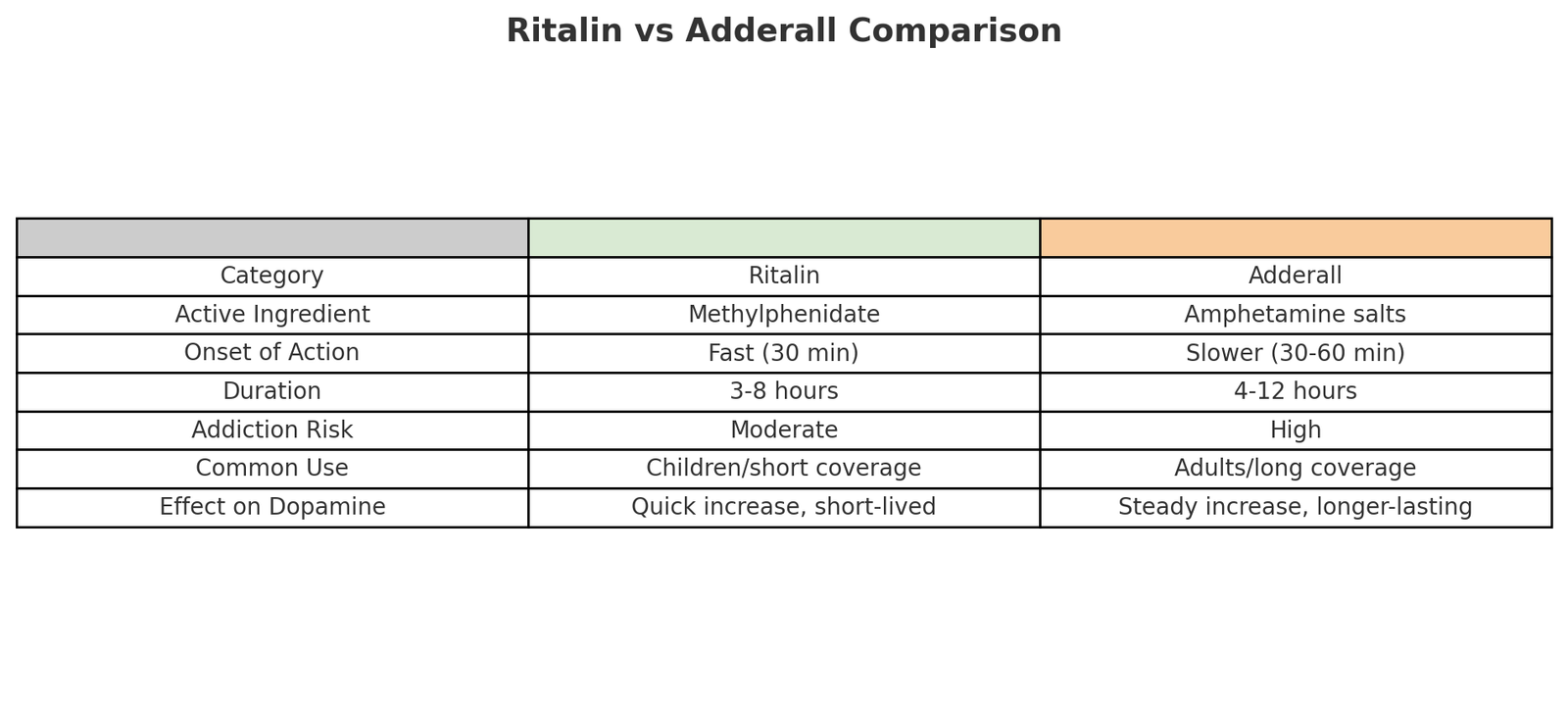
Attention Deficit Hyperactivity Disorder (ADHD) affects approximately 6.1 million children in the United States, and the use of medications like Adderall and Ritalin has become increasingly common. While both medications are effective for managing ADHD symptoms, they have distinct characteristics, including their active ingredients, duration of action, onset time, and side effects. Understanding these differences is crucial for patients, healthcare providers, and caregivers.
Ritalin, with its active ingredient methylphenidate, and Adderall, which contains a combination of amphetamine salts, are central nervous system stimulants used primarily to improve focus, decrease impulsiveness, and enhance task completion. However, their mechanisms of action and physiological impacts vary, leading to differing efficacy for individual users. This article provides a thorough comparison of Adderall and Ritalin, addressing key differences, usage considerations, and answering common questions.
By the end of this article, readers will gain a comprehensive understanding of both medications, enabling informed decisions regarding ADHD management. If you or a loved one are weighing the pros and cons of Adderall versus Ritalin, this guide will serve as a valuable resource.
Understanding ADHD Medications: A Brief Overview
Before delving into the details of Adderall and Ritalin, it is essential to understand the broader category of medications used to treat ADHD. Medications typically fall into two categories: stimulants and non-stimulants. Stimulants are the most commonly prescribed and effective treatment options for ADHD. They work by increasing the levels of certain neurotransmitters, primarily dopamine and norepinephrine, in the brain.
Both Adderall and Ritalin belong to the stimulant category, classified as Schedule II controlled substances due to their potential for abuse and dependency. However, their chemical structure and speed of onset can vary significantly. For instance, while Ritalin often leads to quicker effects, Adderall’s effects can last significantly longer, making it essential to discuss the preferred choice with a healthcare provider.
Adderall vs Ritalin: Active Ingredients and Mechanisms
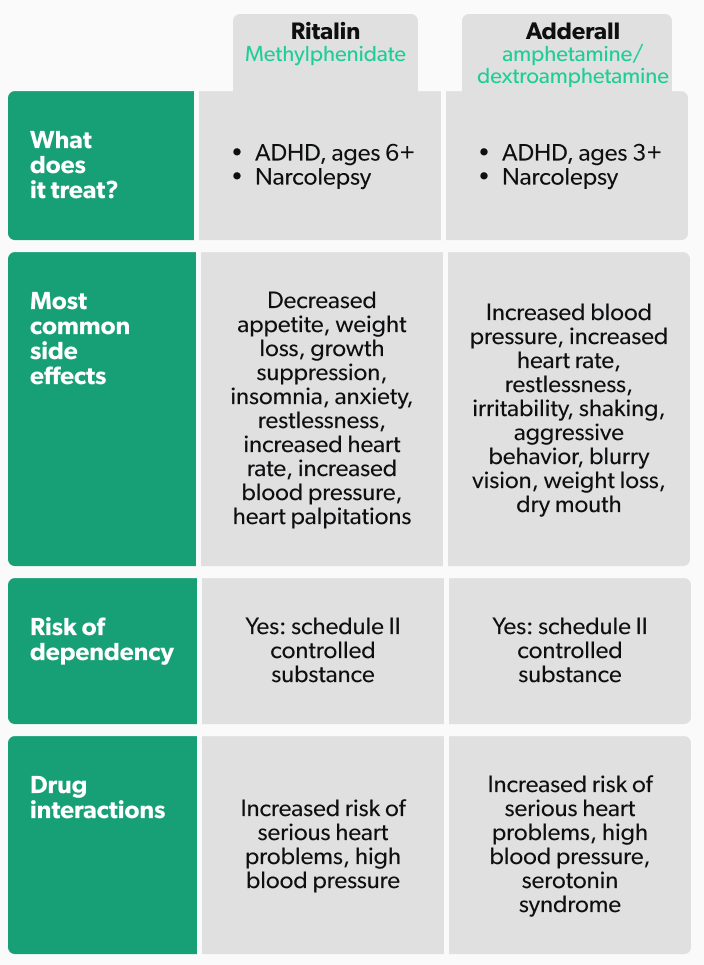
The primary distinction between Adderall and Ritalin lies in their active ingredients. Adderall combines a mix of amphetamines, including dextroamphetamine and racemic amphetamine, while Ritalin primarily contains methylphenidate. This difference in their active components contributes to their distinct pharmacological properties.
Methylphenidate operates by inhibiting the reuptake of dopamine and norepinephrine, leading to increased availability of these neurotransmitters in the synaptic cleft. In comparison, Adderall stimulates the release of these neurotransmitters in addition to blocking their reuptake. As a result, Adderall generally exerts a more pronounced effect on neurochemical pathways, which can be beneficial for some individuals but can also pose a greater risk for side effects.
Additionally, the different metabolic pathways of each medication contribute to their duration and intensity of effects. Adderall’s half-life is typically longer than that of Ritalin, necessitating fewer doses throughout the day. This characteristic can make Adderall a more convenient option for individuals seeking stable long-term symptom management.
Onset and Duration of Effects: Key Differences
One of the most critical factors to consider when comparing Ritalin and Adderall is their onset and duration of effects. Ritalin usually reaches peak plasma concentrations within 1 to 2 hours after ingestion, leading to rapid symptom relief. This quick onset may be particularly useful for patients who need immediate improvement in focus and attention.
In contrast, Adderall may take longer to exhibit its full effects, with peak concentrations occurring approximately 3 hours after administration. However, the sustained effects of Adderall typically last between 4 to 12 hours, depending on whether the immediate-release or extended-release formulation is used. This advantage can be crucial for individuals with school or work commitments, allowing for prolonged focus without the need for multiple doses.
Dosing Considerations and Flexibility
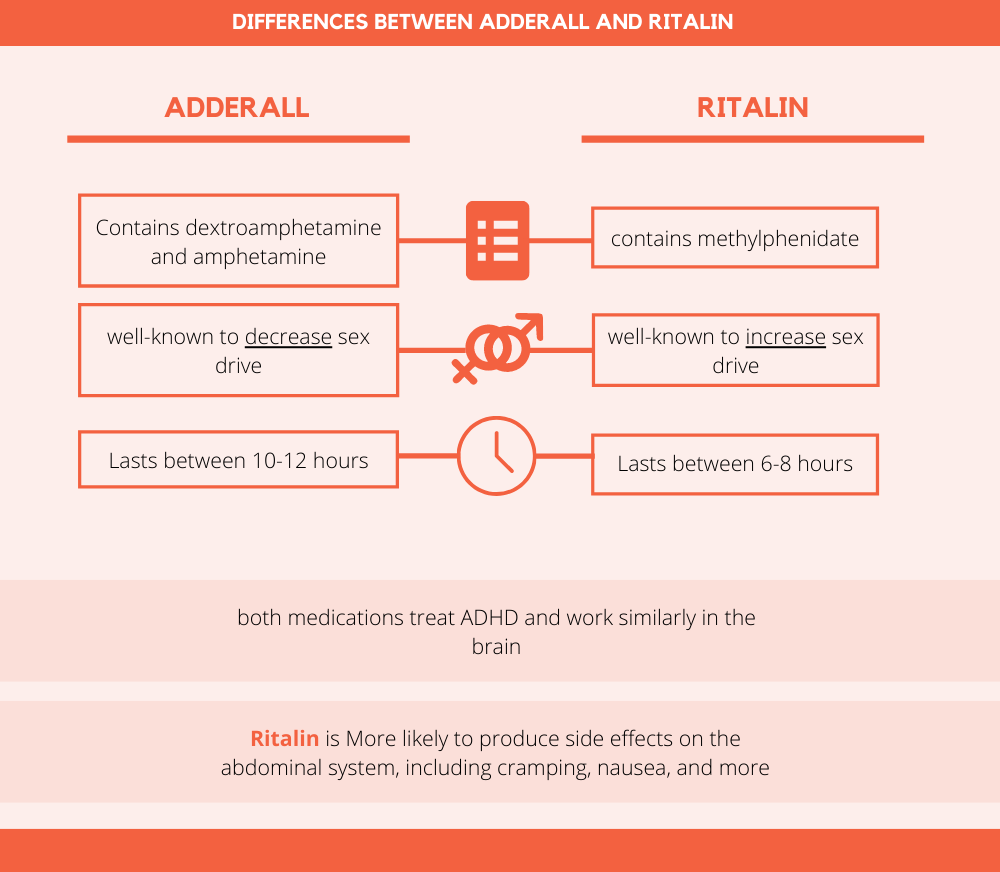
Another aspect where Adderall and Ritalin differ is in dosing flexibility. Ritalin is often prescribed in lower doses taken multiple times throughout the day due to its shorter duration of action, while Adderall’s longer-lasting formula may lead to more straightforward once-daily dosing for some patients.
Particularly in pediatric patients, it can become challenging to manage Ritalin doses as parents need to juggle school schedules and after-school activities. Thus, while Ritalin’s rapid onset is a plus for immediate symptom relief, it may lead to more logistical challenges in daily scheduling. Many parents have noted that these factors lead them to prefer Adderall for older children and adults who have multiple commitments, as fewer daily doses help ensure consistency in medication administration.
Side Effects: Understanding the Risks
Side effects are an essential consideration when evaluating medication options for ADHD. Both Ritalin and Adderall can cause similar side effects that generally fall into the categories of cardiovascular, gastrointestinal, mood alterations, and sleep disturbances.
Common side effects for both medications include:
- Increased heart rate
- Increased blood pressure
- Reduced appetite
- Difficulty sleeping
- Anxiety or agitation
While the side effects may appear similar, some users report differing experiences with each medication. For example, some patients on Ritalin experience more frequent gastrointestinal issues, whereas those taking Adderall may be more prone to anxiety manifestations. Understanding individual responses to medication is crucial; thus, healthcare providers often attempt to tailor treatment based on the user’s experience with side effects.
Is Ritalin or Adderall Better for Adults?
When assessing which medication is better for adults, several factors must be taken into account, including the severity of symptoms, lifestyle demands, and individual tolerance to side effects. Adult patients often report different efficacy results when comparing Ritalin to Adderall.
Studies suggest that while both medications can effectively reduce ADHD symptoms, adults may find Adderall to provide a more consistent and longer-lasting effect, particularly during demanding workdays. Conversely, some adults may prefer Ritalin due to its faster onset for tasks that require concentration but allow for the freedom of flexibility in managing on-the-go schedules.
Ultimately, determining the best option lies in considering the patient’s history, lifestyle, and specific symptoms. The healthcare provider will typically assess these aspects thoroughly during consultations to ensure that the medication aligns with the patient’s needs.
Recreational Use and Misuse Risks
The potential for misuse and recreational use of both Adderall and Ritalin is a growing concern among healthcare providers and public health officials. As both medications are classified as Schedule II controlled substances, they come with a significant risk of abuse and dependency, particularly among young adults and college students.
Adderall, in particular, has garnered attention for its abuse potential within academic settings, where it may be misused to enhance concentration and study performance. Ritalin, while less commonly misused, can still be a target for recreational use due to its stimulant properties.
Users may seek these medications illegally, driven by the misconception that they can enhance cognitive performance or provide a euphoric high. This misuse poses serious health risks, including cardiovascular events, mental health deterioration, and the potential for addiction. Users are encouraged to seek professional treatment strictly and only take these medications as prescribed to mitigate these dangers.
Comparative Effectiveness: What the Research Says
Research comparing the effectiveness of Adderall and Ritalin has produced varied results, rendering the question of superiority complex. A comprehensive review of multiple studies suggests that both medications are effective in reducing ADHD symptoms; however, their effectiveness may vary based on individual responsiveness.
An extensive study published in The Journal of Clinical Psychiatry found that more than 80% of subjects reported improvement with one medication or the other, indicating a significant therapeutic benefit. However, when comparing adherence rates, Adderall demonstrated higher rates of compliance due to its prolonged effects, suggesting patients appreciate the reduction in pill burden.
Ultimately, the efficacy of either medication may depend on broader individual factors, including metabolism, severity of symptoms, and personal preference. As such, it is vital for patients and healthcare providers to monitor the efficacy through ongoing evaluations and discussions throughout treatment.
Modafinil vs Adderall vs Ritalin: A Comparative Overview
In discussing Adderall and Ritalin, it is also essential to contextualize these medications relative to modafinil, a non-stimulant wakefulness-promoting agent increasingly used off-label for ADHD and other cognitive needs. Unlike stimulants that directly impact neurotransmitter levels, modafinil primarily enhances alertness through mechanisms not entirely understood.
Recent research shows that while modafinil may improve attention for some individuals, it typically does not have the same efficacy as traditional stimulant medications like Adderall and Ritalin. This limitation regarding modafinil’s effectiveness suggests that patients with moderate to severe ADHD symptoms may not find it as beneficial. However, individuals who struggle with the side effects of either Ritalin or Adderall may consider modafinil as an alternative under medical guidance.
In summary, while modafinil might offer a different pharmacological approach, its effectiveness is often limited when compared to the stimulant options of Adderall and Ritalin for those with significant ADHD challenges.
Adderall vs Ritalin: Frequently Asked Questions
What should I know before starting Adderall or Ritalin?
Before beginning treatment with either Adderall or Ritalin, it is essential to consult with a qualified healthcare provider. They will conduct a comprehensive evaluation to understand your specific symptoms, medical history, and any other medications you may be taking. This evaluation will ensure that you receive the most appropriate treatment plan tailored to your needs, addressing any potential risks or contraindications. Patients should also have an open discussion with their healthcare provider regarding any concerns or experiences related to stimulant medications.
Can Adderall or Ritalin be used by children?
Both Adderall and Ritalin can be safely prescribed to children diagnosed with ADHD. However, careful consideration of dosage and monitoring of side effects are necessary. Pediatric patients may respond differently to medications; thus, individualized treatment plans are paramount. Parents and guardians are encouraged to work closely with their child’s physician to establish optimal dosing strategies and accurately assess the benefits and risks associated with each medication.
Can I switch from Ritalin to Adderall or vice versa?
Yes, switching from one medication to another is a common consideration for individuals who are not experiencing satisfactory results or are encountering intolerable side effects. Nevertheless, it is crucial to consult your healthcare provider before making any medication changes. They will guide you through the transition process, helping to determine the appropriate dosing adjustments and monitor for potential withdrawal symptoms or adverse reactions.
How can I manage side effects from Ritalin or Adderall?
Managing side effects from these medications often requires a multifaceted approach. Patients should maintain ongoing communication with their healthcare provider regarding any side effects experienced. Some common strategies include adjusting the dosage, changing the timing of medication ingestion, or considering alternative medications. Additionally, lifestyle modifications such as maintaining a balanced diet, engaging in regular physical activity, and establishing healthy sleep routines can support overall well-being while on stimulant medications.
Is it safe to take Ritalin or Adderall with other medications?
When considering taking Ritalin or Adderall alongside other medications, it is essential to discuss this plan with your healthcare provider. There are certain medications that may interact with either stimulant, potentially amplifying side effects or diminishing their therapeutic benefits. Your healthcare provider can offer guidance on safe medication combinations and help adjust dosages if needed.
Are there non-pharmacological options for ADHD treatment?
Yes, there are non-pharmacological options for managing ADHD, including behavioral therapy, cognitive-behavioral therapy (CBT), and lifestyle interventions like exercise and mindfulness practices. These strategies might be used independently or alongside medication to create a comprehensive treatment plan tailored to individual needs. Consulting with a healthcare professional can help determine the best balance between medication and non-medication strategies for effective ADHD management.
Conclusion: Making Informed Choices for ADHD Treatment
In the landscape of ADHD management, both Adderall and Ritalin exhibit unique characteristics that cater to different patient needs and preferences. While their differences in active ingredients, onset and duration, dosing flexibility, and side effects are critical for consideration, the ultimate choice often comes down to individual patient experiences and healthcare provider guidance.
Understanding these medications’ pharmacological properties is essential in making informed decisions towards managing ADHD effectively. Regularly assessing treatment efficacy, addressing any side effects, and maintaining open communication with healthcare providers allow individuals to tailor their ADHD management plans effectively.
For anyone grappling with the decision between Adderall and Ritalin, working closely with a medical provider to evaluate their symptoms, lifestyle, and preferences can lead to a productive path toward better focus, improved performance, and enhanced quality of life.
