🏠 Stay at home! 25% discount on all medicines


What Does Adderall Look Like? A Comprehensive Guide to Identifying Adderall Pills

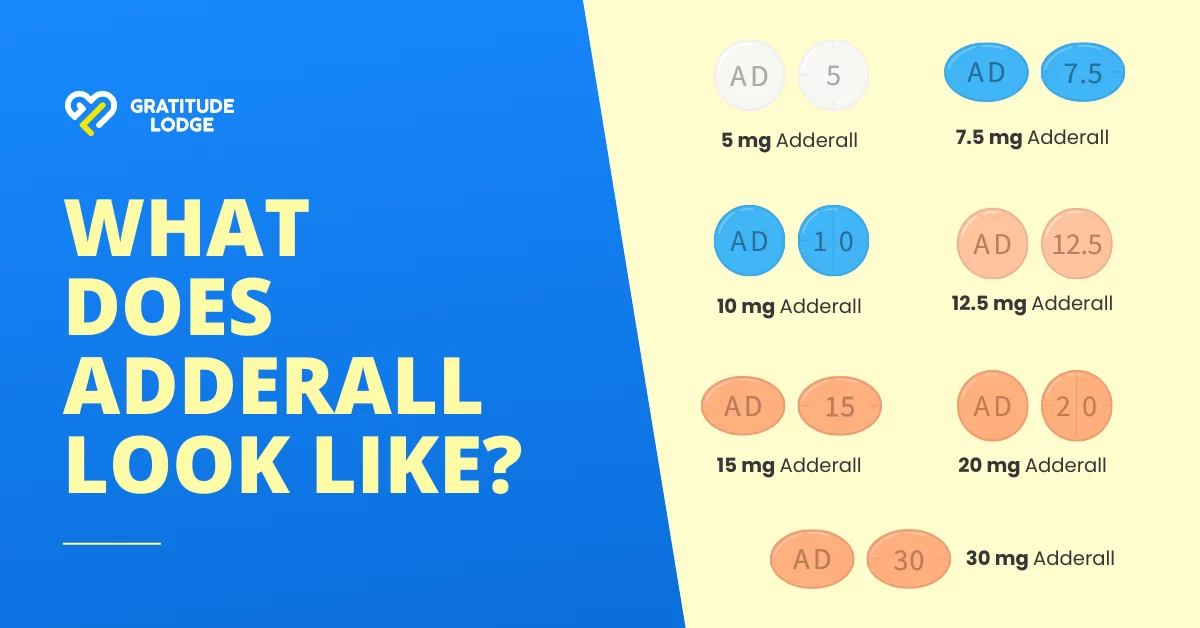
Adderall, a prescription medication primarily used to treat attention deficit hyperactivity disorder (ADHD) and narcolepsy, is composed of a combination of amphetamine salts. As this medication has become increasingly common, so too has the need for individuals to accurately identify its various forms. Whether for legitimate use or concerns about misuse, understanding what Adderall looks like is critical for patients, caregivers, and educators.
Estimates suggest that nearly 6.1% of adults in the United States have been diagnosed with ADHD, leading to a significant rise in the prescription of medications like Adderall. The importance of recognizing these pills goes beyond a simple identification; it could potentially prevent misuse or complications arising from accidental ingestion of the wrong medication. In this comprehensive guide, you will learn not only about the appearances of different Adderall formulations but also about the implications of misuse, potential risks, and how to distinguish genuine Adderall from counterfeit pills.
This article will explore the specific characteristics of Adderall across various dosages and forms. By the end, readers will possess the knowledge necessary to identify authentic Adderall pills by their color, shape, and textual imprinting while also understanding the broader implications of these medications.
What Does Adderall Look Like? An Overview
To comprehensively answer the question, “What does Adderall look like?”, we need to review the forms it comes in, specifically focusing on both immediate-release and extended-release formulations. Adderall is available in tablet form as well as capsule form. Each formulation has distinct physical attributes based on dosage.
1. ***Immediate-Release (IR) Tablets***: These are often characterized by their round or oval shape. The color varies significantly with the dosage, typically presenting as blue, orange, or white. The imprinting – which usually consists of letters and numbers indicating the dosage – is a crucial identifier.
2. ***Extended-Release (XR) Capsules***: Adderall XR capsules are usually clear or opaque and contain small colored beads inside. A hallmark of these is their elongated shape. They might exhibit colors including blue, white, or orange, and allow visibility into their contents.
In the sections below, we’ll assess various dosages, complete with descriptive traits and images to aid recognition.
Immediate-Release Adderall: Identification by Dosage
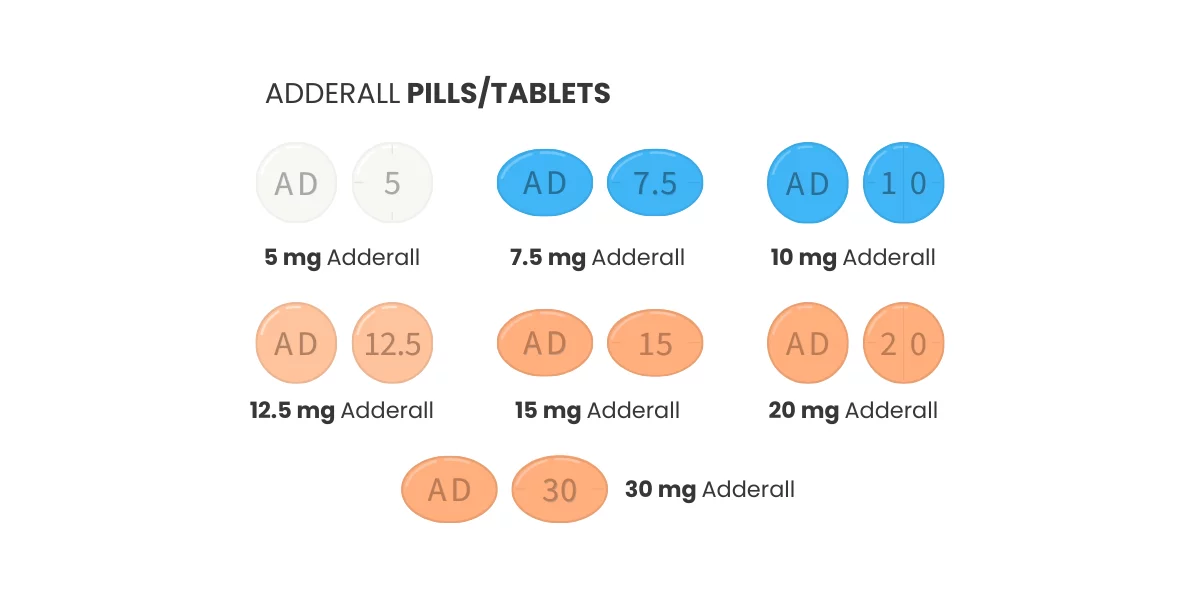
When discussing the appearance of Adderall, it is important to distinguish between its various dosages as each has unique defining characteristics. Here, we will provide a breakdown of the immediate-release formulations by their milligram strength.
What Does Adderall 5 mg Look Like?
The 5 mg immediate-release dose comes in the form of a blue, round tablet. This pill is imprinted with the letters “b 971” on one side, and it is **scored**, which allows for easier division. This lower-dose formulation is typically prescribed to children or individuals who are sensitive to stimulants.
What Does Adderall 10 mg Look Like?
Adderall 10 mg appears as an orange, oval tablet with the imprint “AD” on one side followed by “10” on the opposite side. This specific formulation is designed for patients who may require a moderate dose for therapeutic effects. As a stronger stimulant, this pill must be handled carefully to avoid misuse.
What Does Adderall 20 mg Look Like?
Among the most commonly prescribed dosages, the 20 mg immediate-release Adderall is an orange, round tablet marked with “AD” and “20.” Like many of the other formulations, this size is meant for individuals who have built some tolerance to amphetamines, as well as adults in need of effective symptom management.
What Does Adderall 30 mg Look Like?
The 30 mg variant of immediate-release Adderall is larger and oval-shaped, typically appearing in a light orange color. It features “AD” on one side alongside “30” on the opposite side, making it easily identifiable. This formulation is often prescribed for patients who have not achieved satisfactory control of symptoms with lower doses.
Extended-Release Adderall: Capsule Identification
Extended-release formulations allow for longer symptom control, making them popular among patients who prefer fewer dosages per day. Adderall XR is commonly available in capsule form, exhibiting a different appearance than its immediate-release counterparts.
What Does Adderall XR Look Like?
The Adderall XR capsules typically have a distinct color scheme. The **capsule** is often a combination of orange and white; one end is orange, and the other is white, with the imprint “ADDERALL XR” visible on one side. They are filled with small, colored beads that can be observed through the clear portion of the capsule. This allows patients and caregivers to visually ensure their pill is genuine.
What Do Generic Adderall Pills Look Like?
In addition to brand-name Adderall, there are generic versions that provide the same therapeutic benefits as their branded counterparts. The generic formulations may slightly vary in appearance but still follow the same core characteristics of being identifiable by dosage. For example, generic 10 mg Adderall might appear as a pink, oval tablet, marked distinctly to prevent confusion.
Risks and Misuse of Adderall Forms

The rising prescription rates of Adderall have drawn attention not only for legitimate medical use but also for the potential risks associated with misuse. Understanding the appearance of these drugs becomes vital as counterfeit pills become a growing concern. Awareness can play a significant role in safeguarding against such risks.
Why Is Identifying Adderall Important?
Correctly identifying Adderall is critical for several reasons. First, it can help in achieving appropriate medication management for patients taking Adderall for ADHD or narcolepsy. Second, the illicit use of Adderall among individuals who do not have prescriptions can lead to dangerous health consequences, including increased risks of cardiovascular issues and mental health disturbances.
How Does Misuse Occur?
Misuse can occur in various contexts—from sharing medications among friends to purchasing pills on the black market. Without the ability to identify Adderall accurately, individuals might inadvertently engage in risky behavior, potentially consuming counterfeits that contain harmful substances. This makes vigilance about the physical characteristics of the drug paramount.
Identification to Prevent Abuse
A robust understanding of what Adderall looks like will serve as a protective measure against misuse. By knowing the correct colors, shapes, and imprints for each dosage, individuals can better steer clear of counterfeit products and ensure they are consuming authentic medications. Moreover, healthcare providers can heighten awareness during consultations, ultimately fostering a safer environment for patients.
Frequently Asked Questions about Adderall Identification
What is the shape of Adderall pills?
Adderall is available in both tablet and capsule forms, with shapes depending on the specific dosage. Immediate-release tablets generally appear as round or oval, whereas extended-release capsules are elongated. It is crucial to note the dosage, as the shape and imprint can help verify authenticity.
Are there variations in appearance for generic Adderall?
Yes, generic versions can differ slightly in appearance compared to their brand-name counterparts. For instance, while a brand-name 10 mg Adderall may be an orange oval tablet, a generic version might be pink. It is advisable to familiarize oneself with the specific identifying features of the generics prescribed.
How can I tell if my Adderall is counterfeit?
Identifying counterfeit Adderall relies heavily on recognizing the correct pill characteristics including shape, color, and imprint. If there are discrepancies in appearance or if the pill lacks the expected imprints, it is important to consult a healthcare provider or pharmacist. Purchasing drugs from reputable pharmacies is critical for ensuring product authenticity.
Can I take Adderall with other medications?
When considering Adderall in conjunction with other medications, it is essential to consult your healthcare provider. Interactions may exist with various drugs, leading to altered effectiveness or heightened side effects. Always disclose your complete medication list to your healthcare professional to explore safe administration options.
What are the side effects of taking Adderall?
Some common side effects of Adderall include insomnia, dry mouth, loss of appetite, and increased heart rate. Severe side effects, though less frequent, may include cardiovascular issues or mood disturbances. Regardless of adherence to prescription guidelines, side effects tend to manifest during use, warranting close observation and medical consultation when necessary.
Is it safe to share my Adderall with someone else?
No, sharing prescription medications is highly discouraged due to the potential for adverse effects and legal ramifications. Each individual’s health status and history must be taken into consideration when administering medications, leading to the paramount importance of personal accountability for prescription adherence.
Conclusion: Recognizing the Importance of Adderall Identification
In a landscape where prescription medications are subjected to misuse and counterfeit threats, understanding how to identify what Adderall looks like is more crucial than ever. With various formulations and dosages in circulation, having a firm grasp of the physical attributes of legitimate Adderall medications can empower individuals to make informed choices about their health and safety.
This article has detailed the intricate differences among immediate-release and extended-release formulations while providing practical advice on identifying various doses and understanding the implications of misuse. By recognizing how genuine Adderall should appear, patients can avoid potential pitfalls associated with counterfeit medications and contribute to a safer healthcare environment.
As the prescription landscape continues to evolve, staying educated and vigilant remains a key component in ensuring that individuals use medications responsibly and effectively. Empower yourself and others by learning, sharing, and advocating for informed medication practices.
