🏠 Stay at home! 25% discount on all medicines


How Long Does Adderall Stay in Your System? A Comprehensive Guide

When it comes to medication, understanding how long it remains in your system is crucial for multiple reasons, including safety, effectiveness, and legal considerations. Adderall, a prescription medication used to treat ADHD and narcolepsy, is no exception. Research indicates that, on average, Adderall can stay in your system for a considerable period. However, the exact duration varies based on several determinants.
According to various studies and clinical sources, Adderall can generally be detected in the human body for up to 72 hours after the last dose. This duration, however, is not uniform and can fluctuate based on several factors such as the formulation of the medication, metabolic rates, and the individual’s physiological characteristics. This comprehensive guide aims to elucidate how long Adderall stays in your system, as well as the variables that influence detection times.
By the end of this article, you will have a thorough understanding of how long Adderall remains detectable and the possible implications of its presence in your system. Whether you’re an individual taking the medication or someone who might be facing a drug test, this guide aims to provide you with critical insights into this commonly prescribed stimulant.
How Long Does Adderall Stay in Your System?
The duration that Adderall stays in your system can vary widely, typically depending on factors such as the type of test being used (urine, blood, or saliva) and the specific formulation of the drug taken. For individuals using immediate-release Adderall, detection times can differ significantly from those using the extended-release version, known as Adderall XR.
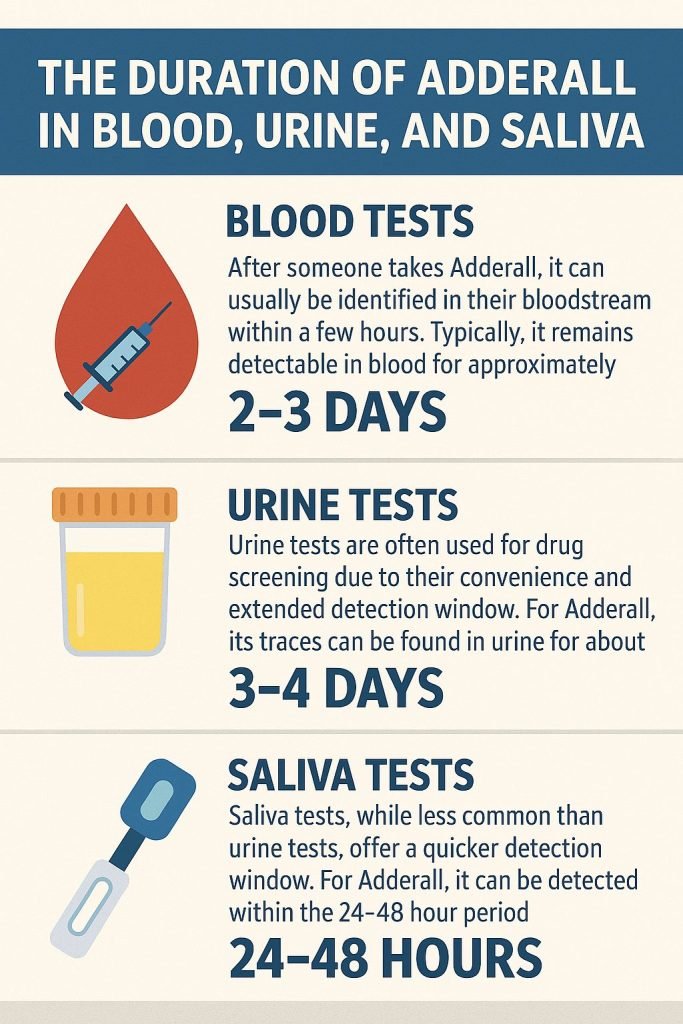
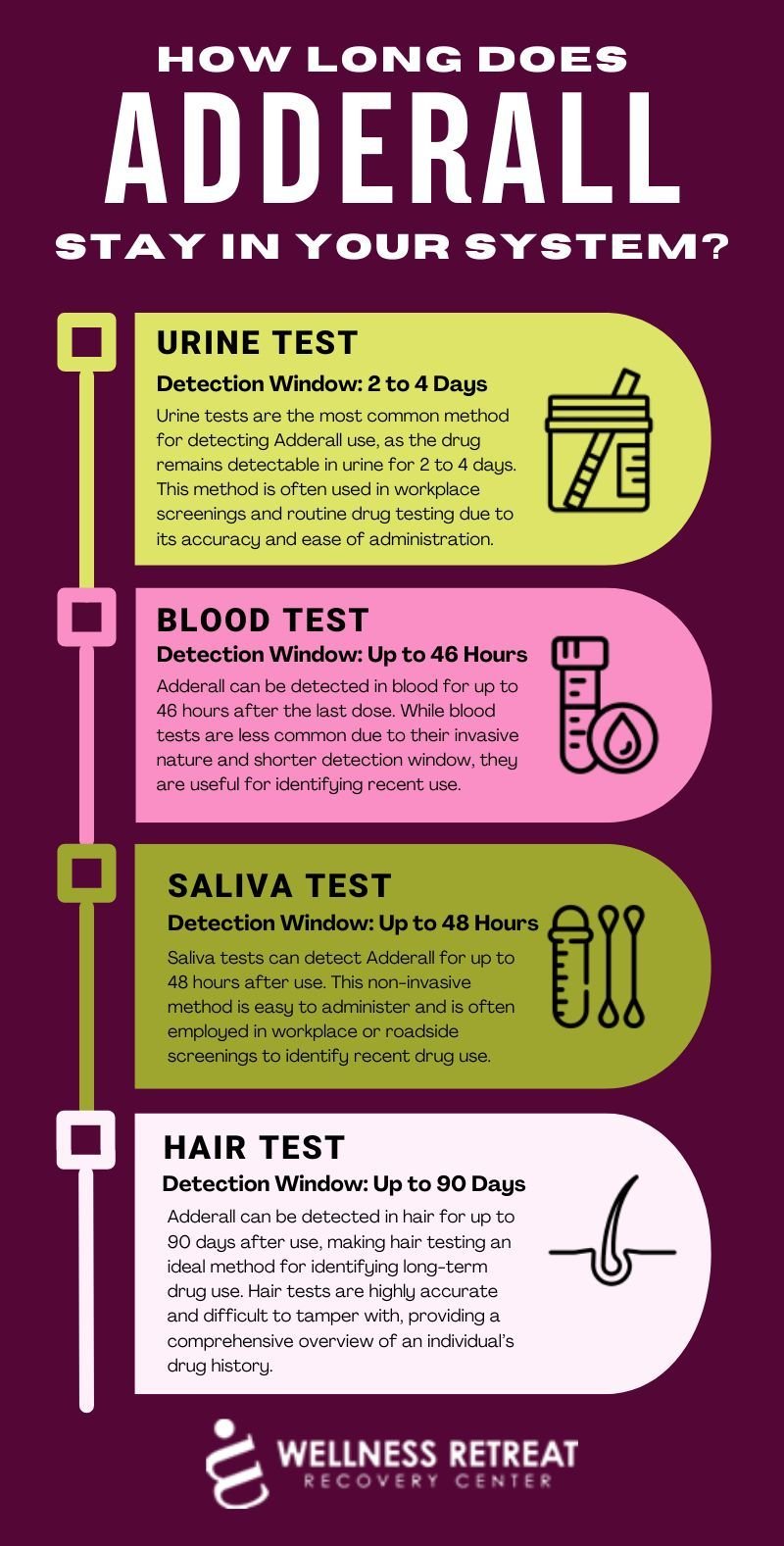
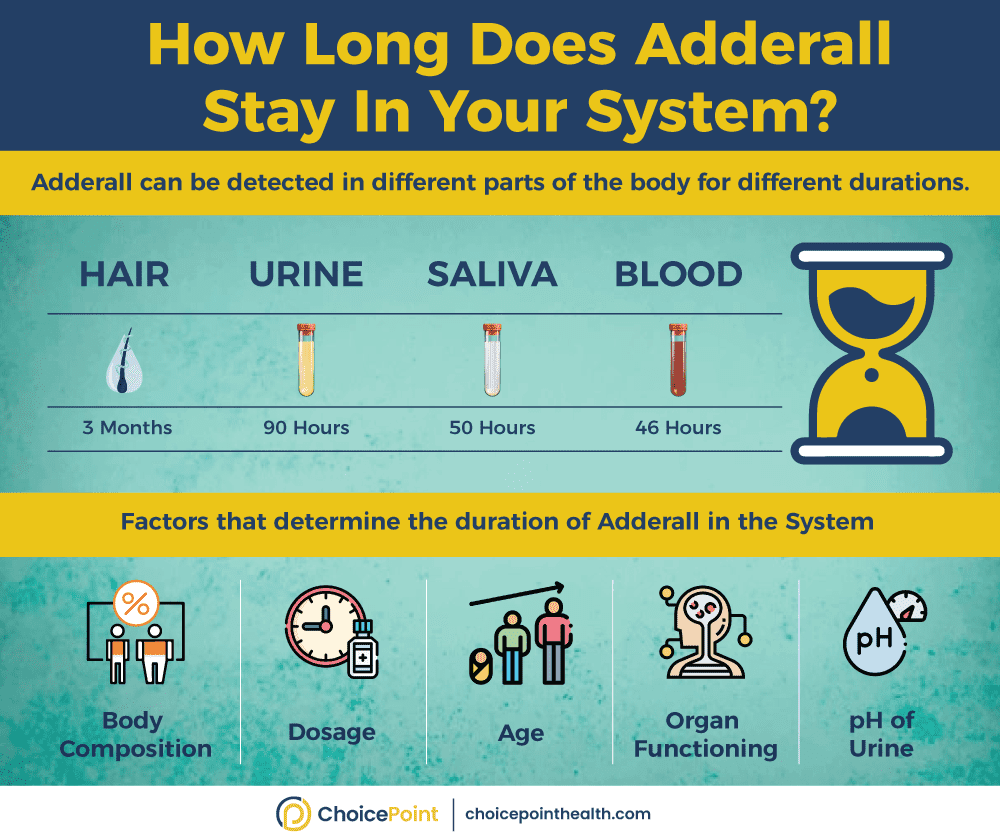
For most standard drug tests, Adderall is primarily detectable in urine, where it can be found for up to 2 to 4 days after the last dose. However, this timeframe may extend to up to a week in some cases, particularly for heavy users or those with slower metabolic rates. Blood tests are relatively short-lived, revealing the drug for approximately 24 to 46 hours post-ingestion, while saliva tests may yield positive results for around 48 hours.
Regardless of the detection method, it is essential to understand your own health and lifestyle factors that may influence how quickly your body processes Adderall. Hydration, age, body mass, and metabolic rate are all elements that can affect detection times and overall drug metabolism in the system.
The Pharmacokinetics of Adderall
To grasp how long Adderall remains detectable in your body, it is imperative to understand its pharmacokinetics — how the body absorbs, distributes, metabolizes, and excretes the drug. Adderall is a combination of amphetamine salts that work by stimulating the release of certain neurotransmitters in the brain, primarily dopamine and norepinephrine. This action enhances focus and concentration.
Once ingested, Adderall is rapidly absorbed into the bloodstream, demonstrating peak plasma concentrations roughly between 3 to 4 hours later for the immediate-release formulation. The drug undergoes metabolic processes primarily through the liver, where it is converted into various metabolites before being eliminated from the system. In healthy adults, the overall half-life of Adderall is typically around 9 to 14 hours, although this can fluctuate based on individual biological factors.
Although the average person may eliminate Adderall relatively quickly from their system, various factors can significantly affect these timelines. Understanding these factors can help users tailor their expectations regarding detection and drug testing.
Factors Influencing Detection Times
Numerous factors can influence how long Adderall remains in your system and how long it can be detected by drug tests. Each personal case may differ, but some categories of influences include:
- Dosage: The amount of Adderall taken can greatly affect detection times. Higher doses tend to result in longer presence in the system. For instance, a 20 mg dose of Adderall may stay detectable longer than a 10 mg dose.
- Frequency of use: Regular users might experience longer detection periods. Frequent dosing leads to accumulation in the body, resulting in the possibility of detection days after the last intake.
- Metabolism: Each individual’s metabolic rate plays a significant role in how quickly Adderall is processed. Those with faster metabolisms will generally eliminate the drug more quickly than those with slower metabolic rates.
- Age and Health Conditions: Older adults or those with liver issues may have longer detection times as these factors can impair drug metabolism.
- Hydration and Diet: Increased hydration can influence the excretion and concentration of Adderall in urine, possibly leading to shorter detection times. Conversely, a high-fat diet can slow metabolism and prolong detection.
Specific Detection Times Across Different Drug Tests
The method of drug testing significantly affects how long Adderall stays in your system and its detectability. Here’s a breakdown of detection windows based on the most common types of tests:
1. Urine Tests
Urine tests are the most widely used method for drug detection due to their cost-effectiveness and ease of administration. Adderall generally stays in urine for 2 to 4 days after the last dose. However, this window can extend to up to 7 days for chronic or heavy users.
For example, individuals who take 30 mg or more daily for an extended period may find that the drug remains detectable for a longer period compared to those who take a lower dose or infrequently.
2. Blood Tests
Blood tests provide a more precise measurement of the current presence of drugs. In the case of Adderall, it is usually detectable in the bloodstream for 24 to 46 hours after consumption. The actual duration will vary based on dosage, metabolism, and overall health.
Because of their shorter detection window, blood tests are generally reserved for situations requiring immediate information about drug levels, such as medical emergencies or law enforcement.
3. Saliva Tests
Saliva tests are becoming increasingly popular for on-site drug testing. When it comes to Adderall, it can typically be detected via saliva for approximately 48 hours after the last dose. Similar to blood tests, the detection window in saliva may fluctuate based on individual physiology.
Testing via saliva can present a unique advantage, as it can be conducted non-invasively and easily, fostering an immediate assessment of recent drug use.
How Long Does Adderall Last? Understanding Effects Duration
The duration of the effects of Adderall also correlates directly with how long it stays in your system. The immediate-release form of Adderall typically has a duration of action lasting about 4 to 6 hours, while the extended-release version can last significantly longer—up to 12 hours.
This variance in effects can have implications for usage, particularly concerning timing for dosages and the potential for misuse. The long-lasting impact of Adderall XR can lead some individuals to self-dose or misuse the medication, which can result in even longer detection times due to accumulated levels in the body.
Understanding these differences is crucial for managing therapeutic use, as well as for anyone who may be subject to drug testing.
Adderall and Breastfeeding
For nursing mothers, there are essential considerations concerning how long Adderall stays in the system and its presence in breast milk. Studies have indicated that Adderall can be excreted into breast milk. While the concentration of the drug in breast milk is generally lower than in the mother’s bloodstream, it is still detectable.
After a dose of Adderall, it is believed that the medication may remain in breast milk for up to 24 hours. As with other detection times, this factor can be affected by the dosage and the mother’s metabolic rate.
Health professionals often recommend monitoring the timing of breastfeeding after taking Adderall to minimize the amount the infant may ingest. If a mother is taking Adderall, especially in higher doses, discussions with healthcare providers about safety and timing are critical.
Potential Risks and Side Effects of Adderall
While Adderall is effective in managing ADHD symptoms, it is not without risks. Long-term use can lead to tolerance, dependency, and various side effects. Common side effects range from insomnia and loss of appetite to more severe reactions such as increased heart rate and risk of cardiovascular issues.
In terms of misuse, the stigma around Adderall being a
